 Fishers, IN
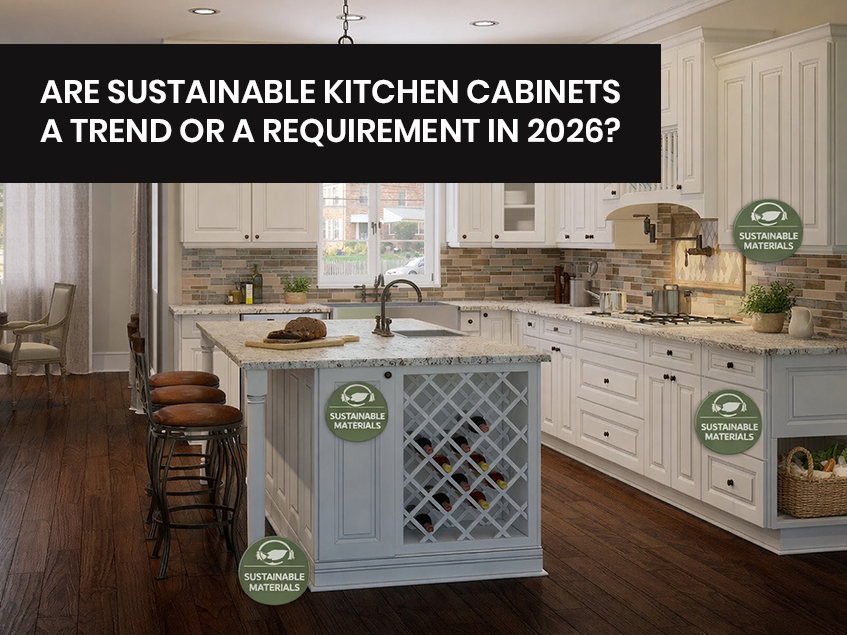
26 Jan Are Sustainable Kitchen Cabinets a Trend or a Requirement in 2026?
Sustainable Kitchen Cabinets: The 2026 Guide
In 2026, the home remodeling landscape underwent a fundamental shift. What was once a niche “eco-friendly” preference has moved to the forefront of every kitchen design consultation. Homeowners are asking about the origin of the wood and the chemistry of the finish.
Driving this surge in interest is:
- A heightened global awareness of environmental impact
- A desire for healthier living spaces
- A growing demand for products that prioritize extreme durability over temporary style
About 32-37% of buyers are shifting towards eco-conscious cabinetry. Given the current buyer expectations and the increasing value placed on home wellness, sustainability is rapidly becoming the new baseline for quality.
What Sustainable Cabinetry Means
To many, “sustainable” sounds like a marketing buzzword, but in the cabinetry world, it refers to a specific set of standards. Three pillars define sustainable cabinetry:
- Responsible material sourcing
- Ethical manufacturing
- Product longevity
It involves using materials like:
- FSC-certified hardwoods
- Bamboo
- Recycled wood fibers
Manufacturing must focus on:
- Reducing carbon footprints
- Minimizing waste
Quality construction, like dovetail joints and solid frames, is a core part of the definition because it keeps products out of landfills. A common misconception is that “eco” means “fragile”; in reality, sustainable kitchen cabinets are often the sturdiest options on the market.
Why Homeowners Are Demanding Sustainable Kitchen Cabinets
Homeowners drive the demand for green cabinets not just out of environmental concern, but also for health and home value. Modern homeowners are acutely aware of indoor air quality. Traditional cabinets often use adhesives and finishes that release Volatile Organic Compounds (VOCs), which can lead to “Sick Building Syndrome.” By demanding low-VOC or formaldehyde-free cabinetry, families are prioritizing their respiratory health.
For modern homes in 2026, the ‘clean’ look now includes clean air. Styles like Boger Oxford Sage or Shaker White provide the minimalist aesthetic popular in modern homes while ensuring the cabinetry meets rigorous low-emission standards.
Additionally, 2026 buyers are “conscious consumers” who value durability. They recognize that a sustainable cabinet is a high-performance cabinet. Choosing materials that resist warping and wear reduces the need for future replacements, aligning with a lifestyle that rejects “fast furniture” in favor of permanent, high-quality investments that support a:
- Healthier planet
- Stable home environment
The Role of Materials in Sustainable Cabinet Design
Material choice is the engine of sustainability. Solid hardwoods like maple and oak serve as gold standards for their ability to undergo refinishing instead of replacement, but engineered woods lead a sustainable revolution.
Modern, eco-friendly plywood and high-density fiberboards often utilize post-consumer recycled content and soy-based adhesives, making them incredibly stable and environmentally responsible. The focus in 2026 has shifted from simply looking for an “eco-label” to evaluating material efficiency.
This means choosing products that use as much of the tree as possible and sourcing wood from local, well-managed forests to reduce transportation emissions. Performance is key; a sustainable material must withstand the moisture and heat of a kitchen without degrading, ensuring the cabinet’s lifecycle spans decades.
Low-Maintenance Finishes as a Sustainability Driver
The finish on your cabinets does more than just provide color; it acts as a protective shield. In 2026, low-maintenance finishes are a major sustainability driver. Finishes that are resistant to moisture, stains, and UV fading mean that the cabinets stay looking new without the need for harsh chemical cleaners or frequent repainting.
We are seeing a massive rise in water-based, UV-cured finishes and natural oils that provide a beautiful matte or textured look. These finishes are not only safer for indoor air quality because of low VOC levels, but they are also exceptionally durable. By reducing the “wear and tear” that typically leads to a kitchen looking “dated” or “worn,” these high-performance coatings significantly extend the life of the cabinetry and reduce long-term household waste.
RTA Cabinets: A Smarter Sustainable Choice?
Surprisingly, Ready-to-Assemble (RTA) cabinets are often the most sustainable options available today. The sustainability “secret” lies in logistics and precision. They ship RTA cabinets flat-packed, which significantly reduces the shipping volume. This allows more products to fit on a single truck, lowering fuel consumption and carbon emissions compared to shipping fully assembled, “air-filled” boxes.
High-quality RTA cabinets like the BogerCasselbury Saddle or Shaker Grey series prove that efficiency doesn’t sacrifice elegance. In contemporary kitchen design, these flat-packed solutions reduce the carbon footprint of your remodel while offering the same solid wood durability as custom-built units.
Furthermore, factory-controlled manufacturing for RTA lines is far more efficient than on-site custom builds. Computer-aided machinery ensures maximum material yield with minimal sawdust and scrap waste. This marriage of shipping efficiency and manufacturing precision makes these choices a smart, eco-conscious move for the modern renovator.
Sustainability vs Cost: What Buyers Should Consider
The most common hurdle for sustainable design is the perceived “green premium.” However, the financial conversation in 2026 focuses on lifetime value rather than just the sticker price. While “cheap” cabinets made from low-grade particle board might save money upfront, they often fail within a few years because of moisture damage or structural sagging. Replacing a kitchen twice in 15 years is far more expensive and wasteful than investing once in high-quality, sustainable cabinetry.
When you account for the lack of repairs, the health benefits, and the increased resale value of a home featuring premium, eco-friendly materials, the “sustainable” choice is almost always the more fiscally responsible one in the long run.
Is Sustainable Cabinetry Becoming an Industry Standard in 2026?
We have reached a tipping point where sustainability is no longer a “premium feature”; it is becoming the baseline. Builders, architects, and manufacturers are adapting to a market where buyers simply expect their products to be non-toxic and responsibly sourced. In 2026, homeowners consider kitchens built without sustainability “behind the times,” and such kitchens may struggle on the resale market.
Leading brands are now competing on who can offer the best indoor air quality certifications and the most transparent supply chains. As regulations around formaldehyde and forest management tighten globally, the industry is moving toward a future where every cabinet produced is “green” by default.
How to Choose Sustainable Kitchen Cabinets Without Overpaying
Navigating the world of “green” marketing can be tricky. To find the best value, homeowners should use a practical checklist:
- Check the Core: Look for plywood or MDF that is CARB2 compliant or NAUF (No Added Urea Formaldehyde).
- Verify the Wood: Ask for FSC (Forest Stewardship Council) certified timber.
- Examine the Finish: Prioritize water-based or natural oil finishes over traditional solvent-based lacquers.
- Focus on Build: Ensure the cabinets feature solid wood frames and durable joinery.
- Ignore the “Greenwashing”: Avoid vague terms like “all-natural” unless third-party certifications such as Greenguard Gold or ESP (Environmental Stewardship Program) back them up.
Key Takeaways
So, is sustainable cabinetry just a trend? The answer is a definitive no. In 2026, sustainability has graduated from a “nice-to-have” design flair to a fundamental requirement for high-quality home construction. This is a smart, future-proof decision that:
- Protects your family’s health
- Ensures your kitchen withstands the test of time
- Respects the environment
Choosing sustainable kitchen cabinets is an investment in the longevity of your home and the well-being of the planet. At Boger Cabinetry, we believe that the best designs are those built to last.
explore Boger Cabinetry styles
FAQs
- 1. Are sustainable kitchen cabinets more expensive?
- While some eco-friendly materials have a slightly higher upfront cost, they offer better lifetime value through increased durability and lower replacement frequency.
- 2. What are low-VOC finishes?
- Low-VOC (Volatile Organic Compound) finishes are paints and stains that release fewer harmful chemicals into the air, leading to better indoor air quality.
- 3. Is RTA cabinetry eco-friendly?
- Yes! Because RTA cabinets ship flat-packed, they reduce shipping emissions. They also feature precision factory cutting that minimizes wood waste.